
Best Jump Starter Pack For UK Motorists - What To Buy Before Your Car Battery Lets You Down
 By Ray Barnes
 A portable jump starter pack can be a useful bit of kit for UK motorists, especially as a backup or if your car does short journeys, sits unused, or struggles in cold weather. This guide explains what a jump pack does, what size to buy, what to avoid, and when a flat battery still needs proper testing.
Affiliate disclosure: This article contains affiliate links. If you buy through one of my links I may earn a small commission, at no extra cost to you. I only recommend products I've personally looked at and would genuinely suggest to a fellow motorist.
A flat car battery is one of those problems most motorists only think about after it has already happened.
You get in the car, turn the key or press the start button, and instead of the engine firing up you get clicking, dim dashboard lights, or nothing at all. It usually happens at the worst time: early morning, after work, in cold weather, at the supermarket, or when the car has been sitting for a few days.
That is where a portable jump starter pack can make sense.
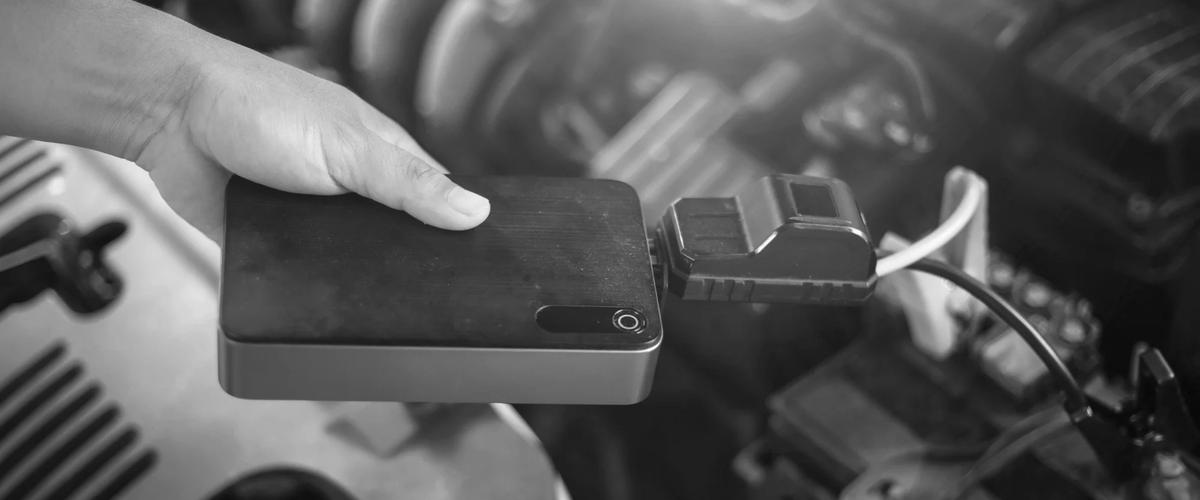
A jump starter pack, sometimes called a car battery booster pack, battery jump pack, lithium jump starter or portable car starter, is designed to give your vehicle battery a short burst of power so the engine can crank and start. For many UK motorists, it can be a useful emergency item to keep in the boot.
But it is worth being clear upfront: a jump pack is not a magic fix for every non-starting car.
It may get you going if the battery is flat or weak, but it will not repair a failed battery, faulty alternator, starter motor issue, immobiliser fault, fuel problem or deeper electrical fault. Used properly, it can save you being stranded. Used with the wrong expectations, it can give you false confidence.
This guide explains what to look for, what size jump starter pack you might need, who should consider buying one, and when it is better to call for roadside assistance instead.
What Is A Jump Starter Pack?
A jump starter pack is a portable battery unit that connects to your vehicle battery using jump leads or smart clamps.
Instead of needing another vehicle to jump start your car, the pack provides the power itself. Most modern jump packs use lithium batteries, which makes them much smaller and lighter than old-style booster packs.
Many also include extras such as:
- USB phone charging
- Built-in torch
- Digital display
- USB-C charging
- Safety protection clamps
- Power bank function
- Carry case
- 12V accessory outputs on some models
The main purpose, though, is simple: to help start a vehicle with a low battery.
Why Jump Starter Packs Are Popular With UK Motorists
Jump packs have become popular because modern driving habits are hard on car batteries.
Many vehicles now do lots of short journeys, school runs, local shopping trips and stop-start driving. The engine takes a heavy draw from the battery every time it starts, but short journeys may not give the alternator enough time to fully recharge it.
Cold weather makes things worse. A weak battery that just about copes in summer can suddenly fail on a cold morning.
A jump starter pack is especially useful if:
- Your car sometimes sits unused for several days
- You mainly do short journeys
- You park away from easy access to another vehicle
- You drive early mornings or late evenings
- You have an older battery
- You own a second car, van, campervan or motorcycle
- You want a simple emergency backup in the boot
From a roadside point of view, flat batteries are one of the most common reasons people get stuck. A jump pack can be a sensible prevention tool, but only if you buy the right type and understand its limits.
Jump Starter Pack Vs Jump Leads
Jump leads are the traditional way to start a car with a flat battery. They work by connecting your battery to another vehicle’s battery.
The problem is that jump leads need another vehicle, enough space to position both vehicles safely, and someone who is happy for their vehicle to be used.
A jump starter pack is more independent. You do not need another driver. You do not need to move another car close to yours. You can often deal with the problem yourself if it is safe and the fault is only a low battery.
That does not mean jump leads are useless. They are still cheap, simple and handy. But for many drivers, a jump pack is more convenient.
What Size Jump Starter Pack Do You Need?
This is where a lot of buyers get confused.
Jump starter packs are usually advertised with peak amps, cranking amps, battery capacity, engine size ratings and sometimes petrol or diesel limits.
As a simple guide:
Small petrol cars
For small petrol cars, city cars and hatchbacks, many compact lithium jump starters will be enough if the battery is only flat or weak.
Typical examples include:
- Small petrol hatchbacks
- 1.0 to 1.6 petrol engines
- Small automatic cars
- Commuter vehicles
- Occasional-use cars
Look for a quality branded unit rather than just the highest number on the box.
Medium petrol and diesel cars
For family cars, crossovers and smaller diesel engines, it is worth buying a stronger pack with more starting power.
Diesel engines often need more cranking power than petrol engines, especially in cold weather.
Typical examples include:
- Family hatchbacks
- SUVs
- Diesel cars
- Estate cars
- Vehicles with larger batteries
- Cars used for short journeys
Vans, larger diesels and work vehicles
For vans and larger diesel vehicles, do not buy the cheapest small jump pack and expect miracles.
Vans usually need more power, especially if the battery is deeply discharged or the weather is cold.
Look for a higher-rated jump starter pack that specifically states suitability for larger diesel engines.
This is where spending a bit more can be worthwhile. A small underpowered jump pack may work once in perfect conditions, but struggle when you actually need it.
Peak Amps Are Not The Whole Story
Many jump packs are advertised with big peak amp numbers. The bigger number looks better, but it does not tell the full story.
What matters in real use is whether the unit can deliver enough cranking power for your vehicle, safely and repeatedly.
When comparing jump starter packs, look at:
- The stated petrol and diesel engine size rating
- Whether it suits your vehicle type
- Clamp quality
- Safety features
- Customer feedback from similar vehicles
- Cold weather performance
- How long it holds charge when stored
- Whether replacement cables are available
- Warranty and support
A cheap jump starter with a huge claimed number is not always better than a more realistic unit from a stronger brand.
Important Safety Features To Look For
Modern jump packs are safer than old booster packs, but you still need to use them properly.
Look for safety features such as:
- Reverse polarity protection
- Short-circuit protection
- Over-current protection
- Over-voltage protection
- Spark protection
- Temperature protection
- Clear indicator lights
- Smart clamps
Reverse polarity protection is especially important because it helps protect against connecting the clamps the wrong way around.
That said, never rely fully on safety features. Always read the instructions before using the pack, and make sure the red clamp goes to positive and the black clamp goes to the correct negative point or earth point recommended for your vehicle.
Who Should Consider Buying A Jump Starter Pack?
A jump starter pack makes the most sense for motorists who are more likely to suffer flat battery issues or who want a practical emergency backup.
It is worth considering if you:
- Drive an older car
- Own a second vehicle that is not used daily
- Do lots of short trips
- Park on a driveway without easy access to another vehicle
- Work early mornings or late nights
- Drive a van for work
- Have a campervan or leisure vehicle
- Keep a motorcycle or classic car
- Have had battery trouble before
- Want a backup before winter
For the right person, a jump pack can pay for itself if it prevents one avoidable callout or helps you get moving at the right moment.
Who Probably Does Not Need One?
Not every motorist needs to rush out and buy a jump starter.
You may not need one if:
- Your battery is new and tested healthy
- Your car is used daily for decent journeys
- You already have reliable breakdown cover
- You are not confident using battery equipment
- You park somewhere unsafe to work on the vehicle
- Your vehicle has an underlying fault that keeps flattening the battery
A jump pack is helpful, but it should not be used as a way of ignoring a failing battery.
If your car keeps needing a jump start, the battery, alternator or electrical system needs checking.
Can A Jump Pack Start A Completely Dead Battery?
Sometimes, but not always.
If the battery is very low, some smart jump packs may not detect it properly. Some units have a manual override or boost mode for very flat batteries, but this should be used carefully and only if the instructions allow it.
A completely dead battery may also be internally damaged or unable to accept charge. In that case, a jump pack might not work at all, or the vehicle may start and then fail again later.
If the dashboard is completely dead, the remote locking does not work, or the battery has been flat for a long time, you may need proper battery testing or replacement rather than just a jump start.
Will A Jump Starter Pack Fix A Bad Battery?
No.
This is one of the biggest things motorists need to understand.
A jump starter pack can help start the engine, but it does not fix the reason the battery went flat.
Your battery may be low because of:
- Age
- Cold weather
- Short journeys
- Interior lights left on
- Dashcam drain
- Alarm drain
- Faulty alternator
- Loose or corroded terminals
- Parasitic electrical drain
- Vehicle not being used enough
If the battery is simply low because the lights were left on, a jump start may be enough to get you moving again.
But if the battery is old, weak or faulty, the problem can return quickly.
What Should You Do After Using A Jump Starter Pack?
After a successful jump start, let the vehicle run and avoid switching it off straight away.
As a practical guide, the vehicle should usually be driven or run for at least 30 minutes to help put charge back into the battery. A longer steady drive is normally better than sitting with the engine idling.
However, this does not guarantee the battery will fully recover.
If the battery is old, damaged or not holding charge, it may still fail again. If the battery warning light stays on, the vehicle cuts out, or electrical systems behave strangely, do not assume it is safe to keep driving.
Signs You Need More Than A Jump Pack
A jump starter pack is useful for a flat battery, but there are warning signs that point to a bigger issue.
You should consider roadside diagnostics or battery testing if:
- The car needs repeated jump starts
- The battery goes flat again the same day
- The battery warning light stays on
- The engine starts then cuts out
- You hear one solid click but no cranking
- The starter sounds slow even after a jump
- Lights dim while driving
- The car has electrical faults
- The alternator belt has failed
- Battery terminals are loose or badly corroded
- The battery is more than a few years old
A jump pack may get you out of trouble once, but repeat flat battery problems need proper checks.
Best Features To Look For In A Car Jump Starter Pack
When buying a jump starter pack for UK use, focus on practical features rather than just big numbers.
1. Enough power for your vehicle
Check the stated engine size rating and make sure it covers your car, van or motorcycle.
If you drive a diesel, especially a larger diesel, do not cut it too fine. Buy a pack with enough headroom.
2. Clear safety protection
Smart clamps with reverse polarity protection are worth having. They reduce the risk of damage if a mistake is made.
3. Good quality clamps
Thin, flimsy clamps are frustrating and may not grip the terminals properly. Strong clamps make the pack easier to use when you are cold, stressed or in poor light.
4. Clear charge indicator
A jump pack that is flat when you need it is no use. A clear battery percentage display or charge indicator helps you know when to top it up.
5. USB-C charging
USB-C charging is handy because it is easier to keep the pack charged with modern cables.
6. Built-in torch
A torch is useful if you break down at night. It is not essential, but it is a practical feature.
7. Carry case
A proper case keeps the clamps, cables and unit together in the boot.
8. Good storage life
Some jump packs hold charge better than others. Whatever you buy, check it every few months and before winter.
Mistakes To Avoid When Buying A Jump Starter Pack
The biggest mistake is buying purely on the advertised peak amp number.
Other common mistakes include:
- Buying a pack too small for a diesel vehicle
- Leaving it in the boot for a year without charging it
- Assuming it will fix a faulty battery
- Using it without reading the instructions
- Connecting clamps to the wrong points
- Trying to start a vehicle with obvious battery damage
- Ignoring repeated flat battery symptoms
- Buying the cheapest no-name unit with poor support
- Not checking whether it works with your vehicle type
A jump pack is only useful if it is charged, suitable for the vehicle, and used safely.
Are Cheap Jump Starter Packs Worth It?
Some cheaper jump starter packs can be useful for small petrol cars, but there are limits.
If you only need a basic emergency backup for a small hatchback, a cheaper unit from a known brand may be enough.
If you drive a diesel, van, SUV or work vehicle, it is usually worth buying something stronger.
The problem with very cheap jump packs is not just whether they work once. It is whether they work when cold, when stored for months, when the battery is low, and when you actually need them under pressure.
From a roadside point of view, I would rather see someone buy a sensible mid-range pack that suits their vehicle than the cheapest unit with the biggest claims.
Should You Keep A Jump Starter Pack In The Car?
Yes, but only if you maintain it.
Keeping a jump pack in the car makes sense because battery problems often happen away from home. But you need to check the charge level every few months.
Before winter, charge it fully and make sure the leads and clamps are still in the case.
Also avoid leaving the pack somewhere it can get damaged, soaked or crushed by heavy items in the boot.
Jump Starter Pack Or Battery Charger?
A jump starter pack and battery charger are not the same thing.
A jump starter pack is for emergency starting. It gives a short burst of power to start the engine.
A battery charger is for slowly charging the battery properly over time.
If your car sits unused for long periods, a smart battery charger or trickle charger may be better prevention. If your car fails to start unexpectedly, a jump pack is the emergency tool.
Some motorists benefit from both:
- Jump starter pack for emergencies
- Smart charger or solar trickle charger for prevention
For cars that sit unused, prevention is often better than waiting for the battery to go flat.
What About Hybrid And Electric Vehicles?
Hybrid and electric vehicles can still suffer from 12V battery issues, but you need to be careful.
Many hybrid and electric vehicles use a 12V battery to power control systems, locks and electronics. If that battery goes flat, the vehicle may not wake up or go ready.
However, jump starting procedures can vary by manufacturer. Some vehicles have specific jump points under the bonnet rather than direct battery access.
Always check the vehicle handbook before using a jump pack on a hybrid or electric vehicle. If you are unsure, call for professional help.
Do not guess with high-voltage vehicles.
Ray’s Honest Take
From a roadside point of view, a jump starter pack is one of those products that makes sense for the right driver.
I see flat battery problems all the time. Cold mornings, short journeys, cars sitting unused, older batteries and people assuming the battery is fine because the lights still come on. The problem is that starting the engine takes much more power than running the radio or dashboard lights.
A decent jump pack can be a good bit of emergency kit. It can help you get moving without waiting for another vehicle or relying on jump leads. For a motorist who has had battery trouble before, owns a second car, drives a van, or mainly does short journeys, it is worth considering.
But I would not tell every customer to buy one and forget about the battery.
If your car keeps going flat, you need the battery tested. If the alternator is not charging, a jump pack will not fix that. If the starter motor has failed, a jump pack may do nothing. And if the battery is old and weak, it may need replacing rather than repeatedly boosting.
My honest advice is this: buy a jump starter pack as an emergency backup, not as a replacement for proper battery maintenance.
Recommended Jump Starter Pack Reviews
I have started reviewing jump starter packs and battery related products from a practical UK roadside point of view.
When comparing reviews, look at:
- Whether it suits petrol, diesel or van use
- How easy it is to use
- Whether the clamps look practical
- What safety features it has
- Whether it offers good value
- What limitations are worth knowing upfront
You can browse my jump starter pack recommendations and product reviews to compare options before buying.
Quick Buying Checklist
Before buying a jump starter pack, check:
- Does it suit your engine size?
- Is it suitable for petrol or diesel?
- Does it have smart safety clamps?
- Does it include reverse polarity protection?
- Is the unit from a known brand or well-reviewed seller?
- Does it come with a case?
- Is it easy to recharge?
- Will you remember to keep it charged?
- Is your battery actually healthy?
- Are you buying it for prevention, emergency use, or repeated battery problems?
If you are buying because your car has already failed to start more than once, get the battery and charging system checked as well.
Final Verdict: Is A Jump Starter Pack Worth Buying?
For many UK motorists, yes, a jump starter pack is worth considering.
It is especially useful if your car does short journeys, sits unused, has an older battery, or you want a practical emergency backup before winter.
The key is buying the right size for your vehicle and understanding what it can and cannot do.
A jump starter pack can help with a flat or weak battery. It cannot repair a failed battery, faulty alternator, starter motor issue or electrical fault.
For the right driver, it is a sensible bit of kit. Just do not use it as an excuse to ignore a battery that is already telling you it is on the way out.
Our Services

Ray Recommends
TOPDON JS2000 Pro Car Battery Charger Jump Starter
The TOPDON JS2000 Pro is a portable 12V car jump starter and power bank designed to restart flat batteries on petrol and diesel vehicles. It makes sense for drivers, van owners and campervan users who want a backup option before calling for roadside help.
View full reviewFrequently Asked Questions
What is the best jump starter pack for a car?
The best jump starter pack is one that suits your vehicle’s engine size, has proper safety protection, good clamps and enough power for your petrol or diesel engine. A small petrol car does not need the same size pack as a diesel van, so the best choice depends on the vehicle.
What size jump starter do I need for my car?
Check the jump starter’s stated petrol and diesel engine rating. Small petrol cars can usually use a compact unit, while diesel cars, SUVs and vans normally need a stronger pack. If in doubt, choose a unit with extra power rather than one that only just meets your engine size.
Can a jump starter pack damage my car?
A jump starter pack can cause problems if it is connected incorrectly or used against the vehicle manufacturer’s instructions. Choose a pack with smart clamps and reverse polarity protection, but still read the instructions carefully before use.
Will a jump pack start a completely dead battery?
Sometimes, but not always. If the battery is extremely low, damaged or unable to accept charge, a jump pack may not work. Some packs have a boost or override mode, but this should only be used if the instructions allow it.
How long should I drive after using a jump starter pack?
As a practical guide, run or drive the vehicle for at least 30 minutes after a jump start to help recharge the battery. This does not guarantee the battery will fully recover, especially if it is old, weak or faulty.
Can I keep a jump starter pack in the boot?
Yes, but check the charge level regularly. A jump pack left in the boot for months without charging may be flat when you need it. Charge it before winter and every few months.
Is a jump starter pack the same as a battery charger?
No. A jump starter pack gives a short burst of power to start the engine. A battery charger slowly recharges the battery. If your vehicle sits unused for long periods, a smart charger or trickle charger may be better for prevention.